Friday, July 26, 2019

Sunday, January 20, 2019
I'll give those pesky questions a go
The Guardian runs columns where they ask famous writers to answer a series of questions I got to thinking - what would my answers be? So here they are.
The book
I’m currently reading
Unsheltered by Barbara Kingsolver. It’s so good. I discovered her books in an independent bookshop in Collingwood – one of those where staff read a lot and wrote recommendations to attach to the shelves (and they still do, but that shop is gone now). I picked up Pigs in Heaven and later Animal Dreams and never stopped reading her. Everyone says they loved The Poisonwood Bible but my favourite is actually Prodigal Summer.
Unsheltered by Barbara Kingsolver. It’s so good. I discovered her books in an independent bookshop in Collingwood – one of those where staff read a lot and wrote recommendations to attach to the shelves (and they still do, but that shop is gone now). I picked up Pigs in Heaven and later Animal Dreams and never stopped reading her. Everyone says they loved The Poisonwood Bible but my favourite is actually Prodigal Summer.
The book
that changed my life
Not one book. Every book I read as a child and teenager that showed me something different, new, exciting and that showed me my life was more than what I was living right then. Even if I didn’t understand how just then.
Not one book. Every book I read as a child and teenager that showed me something different, new, exciting and that showed me my life was more than what I was living right then. Even if I didn’t understand how just then.
The book
I wish I’d written
Probably The Book Thief by Markus Zusak – not just because it’s a great book but because it was so hard for him, so weird, and he just kept slugging away at it until he found a way to make it work. Such kudos to him, when most people would give up or write something more “sellable”.
Probably The Book Thief by Markus Zusak – not just because it’s a great book but because it was so hard for him, so weird, and he just kept slugging away at it until he found a way to make it work. Such kudos to him, when most people would give up or write something more “sellable”.
The book
that most influenced my writing
My first pick here would be The Bone People by Keri Hulme. It showed me very early in my writing that you could write in ways other than the standard beginning/middle/end. I wasn’t up to that then, but I remembered it. In my teens I read a huge amount of crime and historical fiction, including Mickey Spillane and Raymond Chandler, and I think that has influenced me a lot more than I realise.
My first pick here would be The Bone People by Keri Hulme. It showed me very early in my writing that you could write in ways other than the standard beginning/middle/end. I wasn’t up to that then, but I remembered it. In my teens I read a huge amount of crime and historical fiction, including Mickey Spillane and Raymond Chandler, and I think that has influenced me a lot more than I realise.
The book
I think is most under/overrated
Currently I would say books that authors co-write with James Paterson (I’ll get criticised for saying that). I’ve seen writers whose work I really enjoy, but their JP novels are boring.
Currently I would say books that authors co-write with James Paterson (I’ll get criticised for saying that). I’ve seen writers whose work I really enjoy, but their JP novels are boring.
The book
that changed my mind
About? Life changes all the time. At the moment I’m reading Seth Godin’s new book about marketing, and that has both changed and confirmed my thoughts on the topic.
About? Life changes all the time. At the moment I’m reading Seth Godin’s new book about marketing, and that has both changed and confirmed my thoughts on the topic.
The last
book that made me cry
Lots of books make me cry, especially if their endings really resonate on several levels. Movies and TV shows do, too. One I remember that made me cry unexpectedly was a fantasy by Juliet Marrillier. And I always cry when I read Fox by Margaret Wild.
Lots of books make me cry, especially if their endings really resonate on several levels. Movies and TV shows do, too. One I remember that made me cry unexpectedly was a fantasy by Juliet Marrillier. And I always cry when I read Fox by Margaret Wild.
The last
book that made me laugh
Janet Evanovich’s books always made me laugh out loud, until I got to about No. 15, and the humour/jokes got tired. Right now, I can’t think of any recently – maybe I read too much crime fiction!
Janet Evanovich’s books always made me laugh out loud, until I got to about No. 15, and the humour/jokes got tired. Right now, I can’t think of any recently – maybe I read too much crime fiction!
The book
I couldn’t finish
I don’t finish more books now than I used to, since I realised how slogging through something wasted a lot of time I could be spending on something much better. I confess at the moment Markus Zusak’s Bridge of Clay is sitting there and I still haven’t got past page 50 and I don’t really know why. I will keep trying, because I love his other books. Oh, I know – Macbeth by Jo Nesbo. Just could not get into it. I’m not a fan of classics rewrites, no matter how clever.
I don’t finish more books now than I used to, since I realised how slogging through something wasted a lot of time I could be spending on something much better. I confess at the moment Markus Zusak’s Bridge of Clay is sitting there and I still haven’t got past page 50 and I don’t really know why. I will keep trying, because I love his other books. Oh, I know – Macbeth by Jo Nesbo. Just could not get into it. I’m not a fan of classics rewrites, no matter how clever.
The book
I give as a gift
I try to give books as gifts all the time, either ones I have read and think are really good and should be shared, or ones I hear about and think – that would be perfect for X. So the most recent of those is The Writer’s Map: An Atlas of Imaginary Lands by Huw Lewis-Jones, which I gave to a friend who is a wonderful fantasy writer.
I try to give books as gifts all the time, either ones I have read and think are really good and should be shared, or ones I hear about and think – that would be perfect for X. So the most recent of those is The Writer’s Map: An Atlas of Imaginary Lands by Huw Lewis-Jones, which I gave to a friend who is a wonderful fantasy writer.
My
earliest reading memory
My eldest sister gave me The Magician’s Nephew by C.S. Lewis when I was about ten, and it changed everything for me about books – created my addiction, I think!
My eldest sister gave me The Magician’s Nephew by C.S. Lewis when I was about ten, and it changed everything for me about books – created my addiction, I think!
My
comfort read
I’m not sure I have comfort reads. For comfort I tend to watch TV, things like The Great British Bake Off where I can imagine myself baking marvellous cakes (instead of burning them).
I’m not sure I have comfort reads. For comfort I tend to watch TV, things like The Great British Bake Off where I can imagine myself baking marvellous cakes (instead of burning them).
Friday, November 23, 2018
An Evening with Lee Child

Firstly he talked about the idea of Reacher as a mythical archetype - the silent stranger who rides in off the plains (like in a Zane Grey novel), finding women and children alone and helping to save them. In a similar way to the hero who rides out of the forest and saves everyone - think Beowulf or Odysseus - the knight errant, the wanderer. Of course the saving hero has to leave afterwards and remain mysterious and mythical, and often he lives nowhere 'realistic'. Reacher is fundamentally of myth and legend, in a contemporary world where myth and legend has been ruined.
Child was very aware right from the start that the Reacher books needed a distinctive voice, and really worked to create this - someone who is articulate but unaccustomed to doing much talking. He also said he thought a book is a crude version of an audio recording, so the voice on the page is very important. He thinks about the rhythm of his sentences all the time, so the reader is pushed through the book by the way the sentences work. He does read what he's written aloud.
He doesn't do research, but he talked about having been to all the places that are his settings, and how much he loves trivia and stores little things away. It seemed to me that he has a prodigious memory for details and can draw them out and use them. He never plots or outlines - he starts at Sentence 1 and writes Sentence 2 and just keeps going. He often worries about whether the book will be long enough, and that awareness of length stays with him all the way through. The story unfolds organically - he talked about 'living' the story as it happens and writing it (and he doesn't do revisions or revise with the editors because 'that's how it happened').
He did talk about character arcs, but said he thought it was fatal for an author to fall in love with their character (and mentioned Dorothy Sayers falling in love with Peter Wimsey and the series falling apart). You have to maintain critical distance from your character and stay honest about them. If a character 'takes over' it means the author is not working hard enough. He banishes Reacher from his thoughts when he's not writing a book about him.
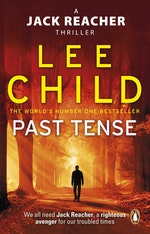 There was some discussion of Reacher's love life - women leave Reacher, not the other way around. An intelligent woman soon works out Reacher is not a good prospect! Child always gets asked about Tom Cruise playing Reacher. He said he loved working with Tom and he is very hardworking and intelligent about how stories work - but Child underestimated how upset people would be that Tom was cast as Reacher in the movies. However, Child had a veto clause and after two movies he was able to say - no more movies. There was mention of a TV series but I'm not sure how serious that was!
There were a few audience questions - one was about guns. Child said: Reacher says never tell a soldier that guns are fun. Anyone who gets excited by handling a gun is the person who shouldn't have one. Another question was about Reacher's age, and Child said Reacher was 36 in the first book, and probably now he is about 52, so he's slowed down the aging (not one book/one year of aging) and there may be more prequels, going back in Reacher's life. 23 books so far and no sign he's stopping writing them.
And two of Child's favourite writers? John MacDonald's Travis MGee books and Dick Francis.
It was interesting to see how many men were in the audience - probably about 50% - but lots of female fans, too! It was a great session and I went home with lots to think about.

Thursday, May 31, 2018
A Touchy Topic

A long, long time ago
(in a galaxy right here) I wrote a children’s chapter book called The Too-Tight Tutu that became a kind of
classic in Australia, for a while anyway. It seemed everybody knew it, with its
bright pink cover and great illustrations by Cathy Wilcox. It stayed in print,
year after year, which is something of an achievement in this age of
disposable, here-today-gone-tomorrow children’s book series. It was one of the
Aussie Bites, which was a terrific series developed by Julie Watts, then
children’s publisher at Penguin.
Over the years I have always
talked about TTTT during school visits. I show the kids a photo of me dressed as
a fairy when I was about six, and sometimes read some of the story (the
beginning where Merry talks about being fat), and also talk about how really
the story is based on me. I was a fat child who desperately wanted to be a
ballerina and, thanks to a ballet teacher who came to our little country school,
I got to do ballet lessons for one year. At the end of that year, when it came
time to dance in the competitions, they couldn’t find a tutu to fit me (or the
character in the story, who’s called Merry). All ends well, of a sort – they find
a tutu at last and she gets to dance on the stage in it, although she doesn’t
win any prizes. Neither did I. Such is life! I wasn’t going to sugar-coat that,
even in a fictionalised version.
But over the past few
years, when I have done a school visit and talked about this book, I’ve seen an
awful lot of adults squirming, and I know exactly why. It’s because I use the word
FAT. Once or twice, I substituted horrible, euphemistic words like large or big or … I try not to remember now. And then I thought – I’m
talking about something that is real for a lot of girls and boys, and using
euphemisms is something I hate at any time. It doesn’t protect anyone. Fat kids
know exactly what you are talking about. I certainly did.
So I went back to
talking about being fat as a kid, about not fitting into any tutu other than an
ugly black and red adult one, and about having dreams and finding out they can
come true. I have a lot of feelings about being fat, about being teased, about
all those years of dieting, about why I have spent most of my life being
overweight. About why I’m not fat now, which is not some heroic Woman’s Day story either.
Recently I read this articleby Kelly deVos about what she calls Body Positivity and what it has meant to
both her and her daughter, and about the YA novel she has written, Fat Girl on a Plane. It’s an interesting
piece, because she talks about how she thought she knew all about feeling positive
about being fat, taking no notice of fat shaming and all the debates about it.
Until her daughter started dieting and she herself was diagnosed with Type 2
diabetes. And it’s still not a simple issue for her – or for anyone!
What is the difference
between talking openly about being fat and what that brings with it in our
society, and fat shaming? The intention, I guess, like any contentious issue.
It becomes even more contentious, weirdly enough, when you try to write fiction
about it. Because you can’t usually get away with a wishy-washy character that
never has an opinion or strong feelings, or always tries to be nice. So what strong feelings will your main
character have about being fat?
Shame? Delight? The urge
to confront? (Not likely when you’re a teen.) How about being matter of fact?
Of simply telling it like it is? Of showing all sides, or at least showing a
layered or multi-faceted view of the topic. Despite TTTT being a chapter book
of less than 4000 words, I suspect it has resonated all these years because I
was honest about me and what it was like. I knew I was fat. I knew it caused
issues, like my mother telling me off for eating too many cakes (usually when
she was out), and not being able to fit the tutu I so badly wanted to wear.
That was simply the story I told.
I don’t believe
shielding or protecting kids from these kinds of facts helps them at all. Like
death, like accidents, like friends who dump them, kids know this stuff happens.
You can pretend all you like that you’re making their lives better by not
talking about it. Ultimately, they know better than you.
There are other things I
could write here about being fat but they are not my stories. When I write
about fat characters now (which I have in a recent MG novel), I write from the
memories of myself in my teens and 20s, and how I felt, and why I ate and ate.
I know damn well that MG novel is going to create more squirming, and it may
also mean it won’t get published. But like TTTT, I wrote it from my heart. We’ll
see what happens next. (And I do intend to read deVos’ book – in the meantime I
highly recommend a YA novel called Fat
Kid Rules the World by K.L Going.)
Wednesday, April 25, 2018
I'm not really eavesdropping ...
OK, I am. I'm out and about, and as I pass you, you say something like, "She told him he had ten minutes to get his stuff and get out", or "I don't know how to tell him how I feel", or "Listen, kid, nobody asked you to be born." I hear you and I wonder what the story is behind those words.
There is a cartoonist in Melbourne who eavesdrops and then draws a cartoon each week in the Sunday Age - Oslo Davis. Funnily enough, his cartoons make me laugh and wonder about people, but they very rarely make me want to write. Perhaps the drawing takes away the urge? Or maybe it's simply that what intrigues him doesn't intrigue me.
Nonetheless, I do listen. And I watch. Sometimes it's better not to hear what they are saying and rely on body language. I do this a lot. Hence the way my boss rolled his eyes once when I asked a question told me a heck of a lot more than his answer, or anything he's done since! I watch the way people sit - arms tightly crossed, heads shaking while they agree with someone, the smile that makes their face look like they are in pain.
I listen to people make promises, pretend they are brave, protest loudly while they twist and squirm in their chair, tell lies while their bodies say they are totally hiding something. I listen to tone. Those who are loud but are whining like small children saying "Not fair". Those who lay down the law but use words and a tone that show their fear. And the people whose smile really does light up a room just because they are genuinely good, happy people (not many of them these days).
 I gather up story ideas from all kinds of places, but very often from things people tell me - or half-tell me. Snippets of memory, of family secrets, of something that deeply affected them. I gather them from stories in the newspaper, too - I once wrote a whole novel based on a sentence from an article about a New York murder. I wrote a whole verse novel based on a social psychology experiment I was told about - the end result bore no resemblance to the original story whatsoever. It didn't matter. The spark was what mattered, what got me thinking, creating characters, making a story, taking huge leaps and bounds with ideas to create something big and meaty.
I have a lot of family stories of my own. After many years of believing I had nothing to say about my own life, apart from in a few poems, I have started writing memoir pieces. One day perhaps my grandson will read them. For now, it's a way of keeping some family history and memories intact. So often the past is dismissed. How many tons of family records, letters, photos and mementos have been tossed in the trash by family members who don't care or think it's better all gone and buried? When you have a family where your parents and grandparents are all gone, suddenly you see how many stories have been lost.
So if you feel the urge to write your own stories, your family stories, or even just to try and preserve things in some way for future generations, do it. And if you write and you hear something that lodges in your brain and won't let go, that you keep on hearing like an echo - let it grow. It could be a novel.
There is a cartoonist in Melbourne who eavesdrops and then draws a cartoon each week in the Sunday Age - Oslo Davis. Funnily enough, his cartoons make me laugh and wonder about people, but they very rarely make me want to write. Perhaps the drawing takes away the urge? Or maybe it's simply that what intrigues him doesn't intrigue me.
Nonetheless, I do listen. And I watch. Sometimes it's better not to hear what they are saying and rely on body language. I do this a lot. Hence the way my boss rolled his eyes once when I asked a question told me a heck of a lot more than his answer, or anything he's done since! I watch the way people sit - arms tightly crossed, heads shaking while they agree with someone, the smile that makes their face look like they are in pain.
I listen to people make promises, pretend they are brave, protest loudly while they twist and squirm in their chair, tell lies while their bodies say they are totally hiding something. I listen to tone. Those who are loud but are whining like small children saying "Not fair". Those who lay down the law but use words and a tone that show their fear. And the people whose smile really does light up a room just because they are genuinely good, happy people (not many of them these days).

I have a lot of family stories of my own. After many years of believing I had nothing to say about my own life, apart from in a few poems, I have started writing memoir pieces. One day perhaps my grandson will read them. For now, it's a way of keeping some family history and memories intact. So often the past is dismissed. How many tons of family records, letters, photos and mementos have been tossed in the trash by family members who don't care or think it's better all gone and buried? When you have a family where your parents and grandparents are all gone, suddenly you see how many stories have been lost.
So if you feel the urge to write your own stories, your family stories, or even just to try and preserve things in some way for future generations, do it. And if you write and you hear something that lodges in your brain and won't let go, that you keep on hearing like an echo - let it grow. It could be a novel.
Subscribe to:
Posts (Atom)
-
 Lee Child, Fiona Veitch Smith, Linda Mather, Sherryl Clark (c) Sherryl Clark 2025 When I knew I was going to Europe, which initially was t...
 -
In the way that these things sometimes do, writers who have decided to stop writing has come up as a topic several times in the past few mon...
-
Today I went for my usual walk, and it occurred to me that my 20 minutes+ is a little like a novel. I start out a bit slowly, with joints an...